Sunday, January 29, 2012

Researching In Salt Lake City's LDS Family History Library

By Susan Kimura

Salt Lake City — I conduct family-history research every day as finding my ancestors and learning about them is an important part of my life. I am a member of the Church of Jesus Christ of Latter-Day-Saints (LDS), also known as Mormons.

The LDS website states: "FamilySearch is a service provided by The Church of Jesus Christ of Latter-day Saints. Our commitment to helping people connect with their ancestors is rooted in our beliefs. We believe that families are meant to be central to our lives and that family relationships are intended to continue beyond this life. We therefore believe that all family members—those living, those past, and those future—share an enduring bond that reaches across the generations."  We perform sacred ordinances in our temples that bind us together, both the living and the deadas families for the eternities.  One of my favorite places to research is the Family History Library in Salt Lake City, Utah, a 35-minute commute from my home.

Susan Kimura and Bettye Pribyl, the 'Texas Tracers'
The Family History Library houses the largest genealogy collection in the world. The collection includes more than 2.4 million rolls of microfilmed genealogical records, 727,000 microfiche, 356,000 books, serials, and other formats, more than 4,500 periodicals and 3,725 electronic resources. There are more than 300 individuals worldwide who photograph records daily and send the images back to expand the collection.

The library has five floors devoted to patron research. Professional genealogists and volunteer missionaries staff each floor to answer questions and offer tips to aid research. There are dozens of computers on all levels, where one can access subscription sites and a myriad of other sites for free. The cost to copy books, maps, and the like is $.05 per sheet and less then $.25 for films. The copiers are now so sophisticated that one can lighten or darken the image, or sections of the image, to create the clearest copy. Internet access for personal computers is also available.

Family History Library in Salt Lake City

The library entrance is on the main floor, where a 15-minute film continually plays on a loop to furnish general information about the library. The books on this floor all pertain to family histories and are in alphabetical order by surname. There is also a small break-room, where one may eat a bag lunch or purchase items from vending machines.

Level B2, the bottom floor, contains books, films, maps, and microfiche pertaining to England, Scotland, Wales, Ireland, Australia, and New Zealand.

Level B1 is the international floor. Many of the staff speak a foreign language and help patrons by reading and translating material. This floor includes all countries except the United States, Canada and those found on B2.

Levels 2 and 3 cover the United States and Canada. Level 2, one floor above the main floor, has films and microfiche, and Level 3 includes books, maps, and pedigrees. The U.S. books are organized by state and county.

The library catalog, also online, offers many choices for researching:

  • last names
  • titles
  • author information
  • subject
  • call numbers
  • film numbers
  • key words

Menu items at the bottom of the page include 'See what’s new,' free courses, browse articles, blogs, and 'Ask for help,' just to name a few.  I’ve taken the free classes at the library, which were wonderful in getting me started.

If you are not going to Salt Lake City, FamilySearch offers a network of 4,500 facilities offering public access to genealogical records worldwide, with locations in more than 80 countries.  At a FamilySearch center, you can access billions of online records, as well as the LDS circulating collection of 2.5 million microfilms from more than 100 countries — according to the library, the largest collection of free family history, family tree and genealogy records in the world. The records span billions of names across hundreds of collections—including birth, marriage, death, probate, land, military, IGI extracted, and more.

You may even find free classes taught on a weekly basis at one of these satellite centers, depending on its size. The staff can also offer research support and help you master computer-assisted search. The goal of the library staff is to help you succeed in your search for ancestors.  And for the very best part — all of this is free! Happy hunting!

FamilySearch Jottings:

FamilySearch.org announced this month that Family History Library will soon be making available to researchers 19 million additional records from 33 countries.  At the moment it can only be accesses in Beta by a select few.  We will alert our readers when we know more. Meanwhile, you can access many existing online records at www.familysearch.org. 

The FamilySearch Newsletter announced this week that they are running a contest!  If you have used Family Search Research Help Services submit your stories on how they helped in your research for a $100 Visa gift card.

FamilySearch RootsTech Conference Will Broadcast Select Sessions Free Online!  During their Family History and Technology Conference February 2-4 2012, FamilySearch is offering 14 free live online broadcasts including one on using Twitter by Geneablogger Thomas MacEntee as samples of the presentations.  View this newsletter online.  


THIS WEEK ON OUR YOUTUBE GENEALOGY CHANNEL:  We featured a beautiful video from the FamilySearch YouTube channel of a grandfather sharing his experience during Pearl Harbour with his granddaughter and great granddaughter as they share the importance of sharing family histories.


ABOUT THE WRITER:  Susan Potts Kimura graduated from Brigham Young University with a degree in English and a minor in history and was a genealogy researcher for a genealogy firm in Salt Lake City.   She is currently an elementary school aide working with slow readers.  Susan is the author of this blog's popular Irish Quaker/Pim articles.


Saturday, January 28, 2012

Megan Smolenyak's New Book, Website, and YouTube Channel


We interviewed the "Indiana Jones of Genealogy," Megan Smolenyak, for this genealogy blog in a two-part post, ‘Connecting Across Oceans and Time’: Q&A With Celebrity Genealogist Megan Smolenyak .

In another post, with Megan's permission, we reprinted her story from the Huffington Post,  How Megan Traced Barack Obama's Irish Family History to Ireland.

We mentioned then her new book, Hey, America, Your Roots Are Showing, and, in a special edition of her Honoring Our Ancestors Newsletter she announced not only her latest book release on January 31,  but the launch of her new website and a new YouTube Channel.

This great video gives some indication of the diverse talents and enterprising approaches Megan employs in her pursuit of genealogy, which includes DNA testing, historical research and her work identifying the unidentified dead.  It also conveys the immensity of her passion for this emotional science, which some still call a 'hobby.' Her generosity in sharing her passion increases every year. Megan continues to inspire and dazzle us here at TheWildGeese.com's Family History Channel.

Congrats on the new book, Megan!

Tuesday, January 17, 2012

Archaeologist Uncovering More Secrets of Ireland's Cilliní in Belfast, Part 3 of 3

 Cilliní, An Issue of Remembrance
Last year's BBC documentary on Ireland's "Limbo Babies" [featured on our Family History YouTube Channel] brought to light an emotionally charged issue that affected almost all of our Irish ancestors.  Ever since the Roman Catholic Church declared that the non-baptized were forbidden burial in consecrated ground, faithful Catholics, particularly parents, were tormented by the uncertain fate of these infants.  
Family stories have been transmitted, often in muted conversations through the centuries, of burials carried out in secret along the fence lines of consecrated ground.  In secret and under the cover of night, our ancestors placed their loved ones, mostly stillborn who had not yet been baptized, as close to consecrated ground as possible or in a place they felt God would better find and embrace them. 
The lack of records for the Cilliní [children's burial grounds] makes it challenging for archaeologists to identify them.  This difficulty is compounded by the Church's ambivalent attitude toward those buried within - they were, in the Church's view, neither in nor completely beyond the family of Christianity.  Even the word Cilliní itself, meaning 'little graveyard' in Irish, suggests the separation of the graves. 


Toni Maguire, the archaeologist and anthropologist featured in "Limbo Babies," started her research in 2006 with the 11 sites recorded by the Northern Ireland Environmental Agency (Sites and Monuments).  Maguire eventually recorded 97 Cilliní for County Antrim alone, a number that is growing.   "Cilliní" sites can vary from bog land to hill tops, fairy trees and prehistoric standing stones, to disused Christian and pagan sites down through the ages, says Maguire. 

This issue was drawn into the public eye when in 2000 the Diocese of Down and Conor, the trustee of Belfast's Milltown Cemetery, sold 37 acres of cemetery land to the Ulster Wildlife Trust for £37,000 [$50,000 US].  The church later described the sale of the land as a "clerical error."  This acreage had long been known to contaqin thousands of bodies in mass inhumation [unconsecrated] graves.  

Maguire came in to assist the families in finding proof that there were far more burials in the land sold than the 11,000 listed in the cemetery records, so they could convince the diocese to buy back the land and return it to its stewardship.  The diocese authorized a survey using ground-penetrating radar to determine just how far into the bog meadows the graves might extend.  The results were so staggering that an extensive excavation project, exploring 51 trenches, was started last month, headed by the Northern Archaeological Consultancy (NAC).

Alannah Ryane, TheWildGeese.com's Family History Producer posed, via e-mail, questions to Maguire as the archaeologist was on site at the Milltown Cemetery dig.  Ryane asked Maguire about the status of the project and what she hopes to accomplish with it.  We continue below with the Q&A, the conclusion of the three parts: 


TheWildGeese.com:  You have stated that you are looking to set a precedent on how the Catholic Church and the government changes their level of protection and care needed for these historical burial grounds.  With the delisting of post-1700 structures in Ireland, how do you see this being accomplished?


Toni Maguire: The delisting of monuments needs to be challenged by archaeologists in Ireland. The potential presence of cilliní in association to churches, in particular, is under threat and we risk compounding the neglect they have already suffered; cilliní represent an important link to our past and present social history. I hope to show by my research that cilliní constitute a worthwhile monument-type in Ireland’s already rich typology and that they deserves more attention from archaeologists and anthropologists, as they provide an opportunity to record a tradition which, while its roots may have their origin in the earliest period of the Christian church, still has an extant social memory in the population of Ireland today. 
 
The establishment of cilliní at existing archaeological or prominent folklore sites within the landscape suggests that local people regarded the magnitude of the associated site as a form of security and a degree of monumentality for the infants buried there. In this way, the cilliní was equally furtive and visible in the landscape, known only to those who established it.
 
TheWildGeese.com: Is there anything you would like to add or that I have not asked of you?  

Maguire: The presence of cilliní within the Irish landscape is an inescapable fact and remains a link with shame in the psyche of Irish Catholics. The Church’s attitude to these burial grounds is, at last, changing and some cilliní have been blessed, to the delight of the family members who remain. 


However, as my research shows, there are too many which still remain unrecognized and neglected as the traditions surrounding them, and their locations, become vague.    Those buried in cilliní are largely ignored by society, generally, and their transition into obscurity is well underway. They are remembered by those members of their family who know of their existence but, in many cases, all memory of these children is lost when the parents die.  I hope that this research has brought cilliní once more into the public domain in an effort to highlight the plight of the innocents buried there and rescue them from complete oblivion. Those communities who have taken matters into their own hands in recent years and erected memorials at cilliní are an inspiration and bring into the foreground the issue of remembrance.  

 
The occurrence of the extraordinary in any culture is usually accompanied by either an added degree of ritual behavior or a diminished form. The psychological needs of the bereaved can influence the behavioral strategies employed for dealing with unusual death. These strategies can become incorporated into tradition and eventually accepted as folklore, which, as an umbrella term, can encompass all manner of behavior that is deemed necessary or acceptable by local populations.

These patterns are linked to social attitudes, which I feel concern the responsibilities the living have for the dead and the extent they will go to, often employing folk religion in an effort to confer a degree of sanctification on the deceased. The primary concern of the families who interred their infants at these sites was to provide a level of ritual not available to them through the Christian church. 

The burial of individuals outside consecrated cemeteries reinforced the view of the Church that they were unworthy of remembrance or the intercessions of the living, but the traditions in Ireland which linked the placing of stones on the graves of the marginalized dead and the building of prayer cairns at the site would suggest that these individuals were very much remembered and prayed for by the living. 
 
Cilliní provides archaeology with an unprecedented opportunity to record the ritual traditions surrounding them, and they are justified in their classification as an archaeological monument through their continued long-term use. The need for much more research into the background traditions surrounding the interment of unbaptized children and other individuals marginalized in death within Irish society is obvious. The aspects of mythology, folk religion, memory, duty and social history are intertwined with burial at cilliní, all of which we risk losing. WG

ABOUT TONI MAGUIRE:  Toni Maguire has a bachelor’s degree in archaeology and palaeoecology and a master’s degree in social anthropology.  She is currently involved in Ph.D. research at Milltown Cemetery and is married to Leo Maguire, the Northern Ireland National Taekwondo Coach.  Toni has lost three babies, so she can empathize with the families at Milltown. For more information about cillíní, please contact Toni Maguire, at mmaguire19@qub.ac.uk.


Friday, January 13, 2012

Archaeologist Uncovering More Secrets of Ireland's Cilliní in Belfast, Part 2 of 3

 Belfast's Milltown Cemetery: 

Atmosphere ‘tense,’ ‘emotions … just below the surface’

(Images courtesy of Toni Maguire)

Last year’s BBC documentary on Ireland's "Limbo Babies" [featured on our Family History YouTube channel] brought to light an emotionally charged issue that affected almost all of our Irish ancestors.  Ever since the Roman Catholic Church declared that the non-baptized were forbidden burial in consecrated ground, faithful Catholics, particularly parents, were tormented by the uncertain fate of these infants.
Family stories have been transmitted, often in muted conversations, through the centuries, of burials carried out in secret along the fence lines of consecrated ground.  In secret and under the cover of night, our ancestors placed their loved ones, mostly stillborn who had not yet been baptized, as close to consecrated ground as possible or in a place they felt God would better find and embrace them.

The lack of records for the cillíní [children’s burial grounds] makes it challenging for archaeologists to identify them. This difficulty is compounded by the Church’s ambivalent attitude toward those buried within – they were, in the Church’s view, neither in nor completely beyond the family of Christianity.  Even the word cillíní itself, meaning 'little graveyard' in Irish, suggests the separation of the graves.

Toni Maguire, the archaeologist and anthropologist featured in "Limbo Babies," started her research in 2006 with the 11 sites recorded by the Northern Ireland Environmental Agency (Sites and Monuments). Maguire eventually recorded 97 cilliní for County Antrim alone, a number that is growing. "Cillíní sites can vary from bog land to hill tops, fairy trees and prehistoric standing stones, to disused Christian and pagan sites down through the ages,” says Maguire.

This issue was drawn into the public eye when in 2000 the Diocese of Down and Conor, the trustee of Belfast's Milltown Cemetery, sold 37 acres of cemetery land to the Ulster Wildlife Trust for £37,000 [$57,000 US]. The church later described the sale of the land as a “clerical error.” This acreage had long been known to contain thousands of bodies in mass inhumation [unconsecrated] graves.

Maguire came in to assist the families in finding proof that there were far more burials in the land sold than the 11,000 listed in the cemetery records, so they could convince the diocese to buy back the land and return it to its stewardship.  The diocese authorized a survey using ground-penetrating radar to determine just how far into the bog meadows the graves might extend.  The results were so staggering that an extensive excavation project, exploring 51 trenches, was started last month, headed by the Northern Archaeological Consultancy (NAC).

Alannah RyaneTheWildGeese.com’s Family History Producer, posed, via e-mail, questions to Maguire as the archaeologist was on site at the Milltown Cemetery dig. Ryane asked Maguire about the status of the project and what she hopes to accomplish with it. We continue below with the Q&A, the second of the three parts:

TheWildGeese.com:  What is the general atmosphere at the site, and who was there to witness this initial excavation?

Toni Maguire Milltown Cemetery Dig - Jan 2012
Toni Maguire: The atmosphere is tense and emotions are always just below the surface, but the families draw strength from each other as they sprinkle the ground with Holy Water and pray to find all those buried in the land. There is a small excavation team from NAC [Northern Archaeological Consultancy] who have braved the cold and rain to complete the work. The start of the excavation was witnessed by me and a selection of representatives from among the families.

The potential for emotional distress must be considered here; these relatives have had an emotional journey to get to this point, and all credit is due to them for remaining steadfast in the face of opposition from many quarters. The prospect of disturbing infant remains has been a hard realization to deal with for relatives, never the less, they want to finally know the truth of what happened to the ‘Shoe-Box’ babies of Milltown Cemetery.

TheWildGeese.com:  Another deeper level of this issue is the concept of Limbo, which the Catholic Church finally abandoned in 2007, interestingly, just when you started your research.  Do you think that the enormity of this declaration and the centuries of cilliní burials that preceded it have left the Church overwhelmed?

Maguire: The belief in an afterlife is a common theme in many religions, which has been firmly entrenched in the psyche of the faithful, irrespective of the faith involved. In Christianity, active participation in the rule of the Church and the sacraments was seen as the only path to salvation and everlasting life with God. The alternative to salvation involved eternal torment in Hell, from which there was no escape. 

The Theological Commission instructed by the last Pope to look at the concept of Limbo did not abandon it, but stated that Limbo must be considered in light of God's universal salvific will, and, as such, the church reaffirmed that baptism was still the only sure way to salvation. On April 20, 2007, the International Theological Commission, an advisory body comprised of 30 theologians from around the world, released its long-awaited document, “The Hope of Salvation for Infants Who Die Without Being Baptized.” Sister Sara Butler, a spokeswoman for the commission, was interviewed on the findings and commented, “It must be clearly acknowledged that the Church does not have sure knowledge about the salvation of unbaptized infants who die.”

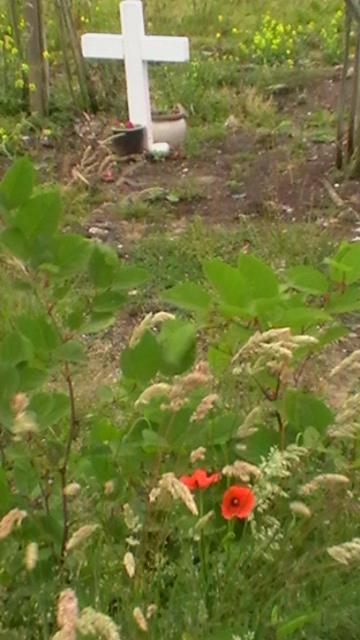
Cillini Baby Graveyard - Unconsecrated Ground
Let’s be quite clear about this, the fate of an infant who died without the blessing of baptism was considered by the Catholic Church as pagan and as such outside the remit of the church.The attitudes of the early Christian church in relationship to the fate of infants and children who died without baptism, was inhumane by today’s standards. It had taken 1,500 years to reform the Catholic Church since the time of St. Augustine, or so we like to think, but the fact that this tradition continued into the mid-1990s in Ireland speaks volumes about the influence on society, in general, of the adherence to this outdated theology of the church and the degree of suffering imposed on grieving parents at a very vulnerable time in their lives. As they had not been initiated into the community of God, according to the Christian church, these children were subsequently denied burial on consecrated ground. 

TheWildGeese.com: The amount of cilliní burials since medieval times all over Ireland must be staggering. How do you plan to proceed in locating them?

Maguire: The establishment of the newly formed group HUG Alliance [Hidden in Unconsecrated Ground] is dedicated to highlighting the plight of those who are buried in a marginalized context in Ireland. We will enlist the help of local historians across the country to collect information on cilliní in their area and for individuals to bring their personal stories to us.  In this way, we intend to record the location of these important social and archaeological sites and address the attitudes of stigma attached to such burial, which is still prevalent in Irish society today. 

Due to the furtive nature of cilliní within the landscape, their very existence often resided in the social memory of the local population; but as those with such knowledge pass on, the location is lost. Cilliní represented a cultural and religious solution to a complex problem, the burial of infants and children who died without the sacrament of baptism.

The view of the Christian church was clear; these children died with the stain of original sin on their soul and could, therefore, not be buried on consecrated ground. These children were denied a social persona, no marker displayed their name and as such they constituted a marginalized group within the society of the dead as well as the living; in the eyes of society, these children were destined to suffer a double death, both physical and spiritual. The focus of my research has been to save cilliní and its associated traditions from obscurity. 

ABOUT TONI MAGUIRE:  Toni Maguire has a bachelor’s degree in archaeology and palaeoecology and a master’s degree in social anthropology.  She is currently involved in Ph.D. research at Milltown Cemetery and is married to Leo Maguire, the Northern Ireland National Taekwondo Coach.  Toni has lost three babies, so she can empathize with the families at Milltown. For more information about cillíní, please contact Toni Maguire, at mmaguire19@qub.ac.uk.